Fraser Mills Station
Story of a Train Station
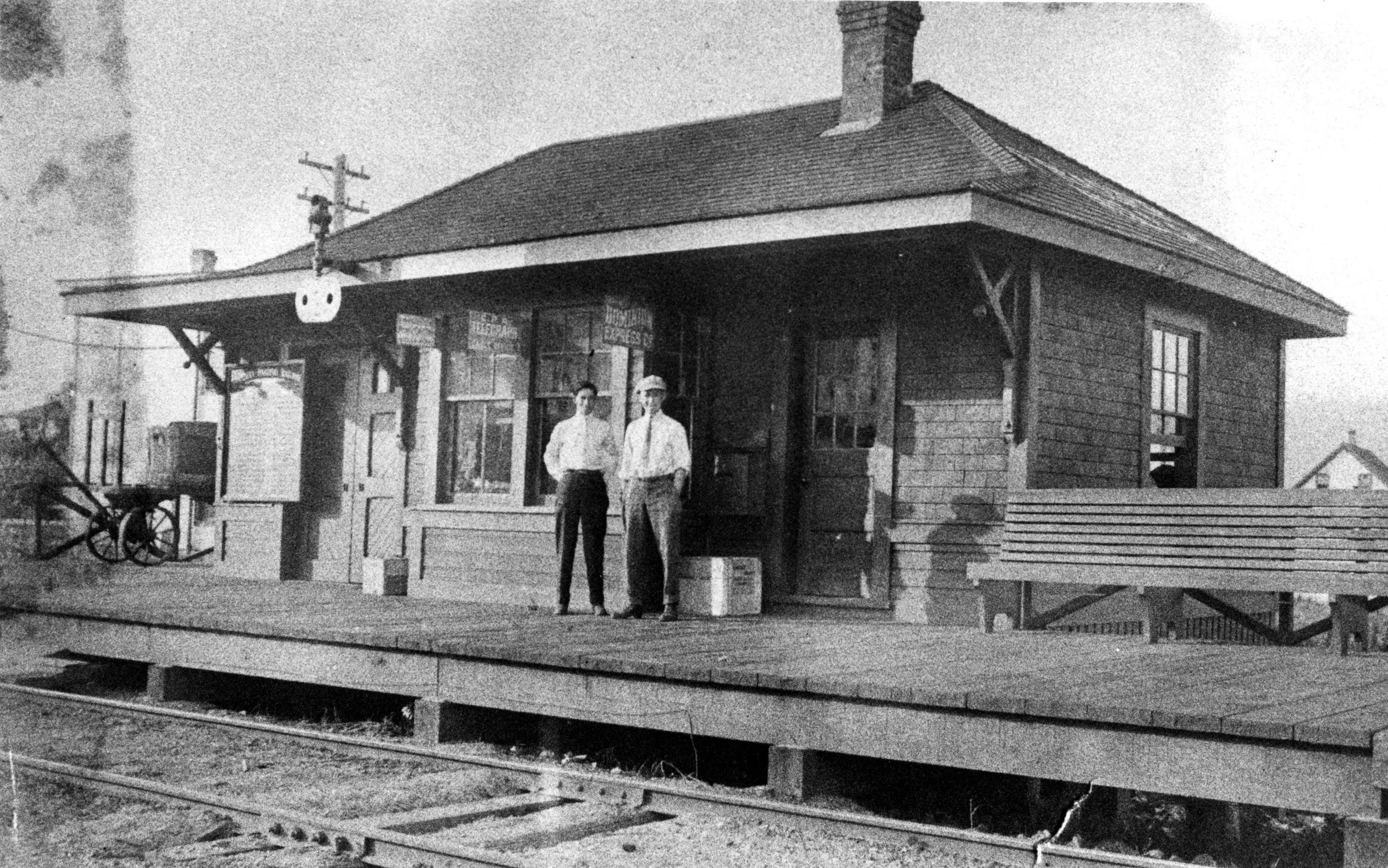
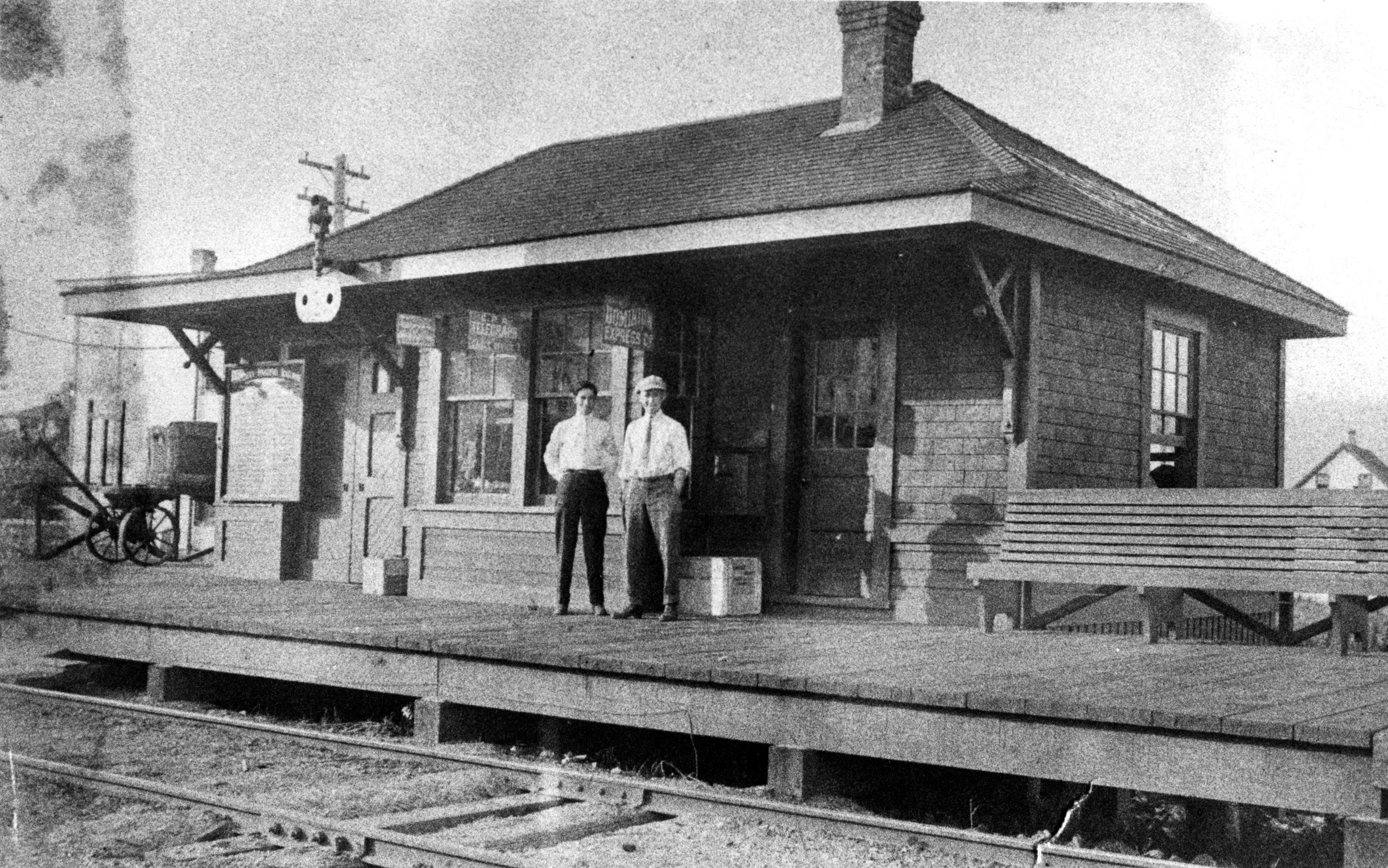
The Fraser Mills Station was built in 1910 at the King Edward and Grade crossing. It was one of five stations of the New Westminster Division of the Canadian Pacific Railway. There was a smaller station that preceded this one built in 1890. The mill, population, and landscape changed drastically in those 20 years and this station was a jumping off point for these changes.
The ever-growing lumber industry in British Columbia required lots of workers. Fraser Mills (formerly the Canadian Western Lumber Company) needed a large workforce to keep the mill operating and shipping lumber around the world.
-
Fraser Mills bowed to anti-Asian attitudes of the time and decided to replace their mostly Asian workforce with white workers. In 1909, the company sent a night watchman and a Catholic priest to recruit French Canadians from Eastern Canada. To attract white workers, French Canadians were incentivised with a wage of $2 a day (compared to the $1.25 the Asian workers were making).
The Canadian Western Lumber Company had built homes for the new workforce but there were not enough and the two-room cabins that were built were inadequate for the often large French Canadian families. The company purchased land north of the mill, at the top of the hill. The new arrivals bought and cleared this land and built their homes with lumber from the mill that was bought at cost. The workers gradually moved out of the townsite by the mill and formed their own community named Maillardville.
The first arrival of French Canadians came by train in September 1909. The second group arrived in the spring of 1910. The 1910 train was nicknamed The Honeymoon Special because five couples were married in Quebec the night before they left for Fraser Mills. Many families slept in the train carriages or above the company store while they waited for the men to clear the land and build their homes.
This station building is made to the CPR Standard No. 6 Station specifications. It replaced the original 1890 station to accommodate the booming population growth of 1910. It offered a telegraph service for sending messages and express service for shipping parcels. The station worked in conjunction with the mill to ship lumber. Service to and from the station died down in the late 1950’s. In the early 1970’s, the building was moved to Blue Mountain Park where it was on display for many years. It was designated a heritage building and moved to its current location in 1999.
First Nations and the Canadian Pacific Railway
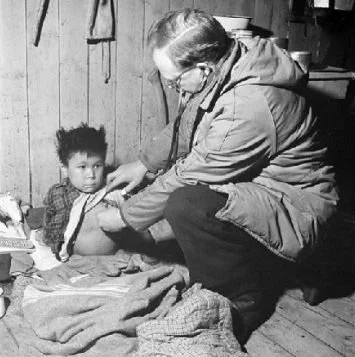
James Bay Cree child with tuberculosis.
Bud Glunz, National Board of Canada, PA-161452
The Canadian Pacific Railway was instrumental in the colonization of Canada. Treaties one through seven were used to clear First Nations people from their land. Many thousands of them, across the country, were forced off their traditional territories and onto reserves to make room for construction of the railway and settlements for the white arrivals. The CPR even had “Colonist Cars” designed for people travelling to settle western Canada.
-
Many First Nations were opposed to the railway from the beginning but were not consulted by the government. They had seen railway construction in the United States destroy buffalo populations and critical natural resources. Some treaty negotiations promised humanitarian aid from the government but this did not come when the bison they relied on began to disappear and the salmon runs were disturbed. The fears of the First Nations in opposition to the CPR had been realized.
One effective method of subjugating and expropriating First Nations peoples used by government agents was to withhold rations. They were to starve or to leave. Government troops quashed any First Nations’ protests or defense of their land. After the tracks were laid, diseases brought by the settlers spread rapidly through First Nations’ communities and drastically decreased populations.
In addition to displacement, disease and hunger, the railway imposed a new way of life for some who needed a new way to survive.
Though rarely recognized for their efforts, many First Nations families earned a living by supplying railway workers with necessities and acting as packers.
Chinese Labour on the Canadian Pacific Railway
When British Columbia joined the rest of Canada in 1871, the government promised a railway that would join the isolated province to the others. Building the railway required an unprecedented amount of manpower, and though there was considerable anti-Asian sentiment at the time, it soon became clear that without the Chinese labourers, the railway would not be completed. Sadly, and not by chance, Chinese residents of British Columbia lost their right to vote in provincial elections in 1872.
-
When the 1849 California gold rush ended, many Chinese men headed north for the 1858 gold rush in BC. where they contributed to the establishment of many communities. The railways offered a new type of employment when the gold rush ended. Their willingness to work for less, and strong work ethic, made them desirable employees, causing even greater anti-Asian feelings among the men who competed with them for work.
CPR contractor, Andrew Onderdonk, assured anti-Asian groups that he would employ white workers and reluctantly employ First Nations and Chinese if he could not source enough labour. As it turns out, he could not. He was unable to entice white workers with the low wages he paid. Lee Tin Pui of California helped him find labour in Hong Kong in 1881, returning with two ships and two thousand workers. By 1883, roughly 6,500 of the 9,000 railway workers were Chinese. Danger, disease, and death were constant companions for the Chinese railway workers. Their living quarters and food supplies were inadequate, and many were very poor and reduced to wearing shoes made from grass or potato sacks. These led to accidents that compounded the already dangerous jobs many Chinese were assigned to, such as blasting with dynamite and volatile nitroglycerin. Many were killed in blasting or landslide accidents.
Promised a dollar a day, these men might have considered the conditions a risk worth taking. In reality, they were not paid for winter months or transportation between camps. The costs of their food, tools, accommodations, and any health supplies were also deducted from their wages. Instead of the estimated $300 a year, they received closer to $43.
The last spike of the CPR was hammered into place in 1885. Approximately 17,000 Chinese men had worked on the railway. Sadly, the Chinese Immigration Act of that year imposed a head tax of $50 on Chinese immigrants. This tax went as high as $500 by 1902 (which equalled two years’ salary). In 1923, the Chinese Immigration Act stopped all Chinese immigration. It was not repealed until 1948.
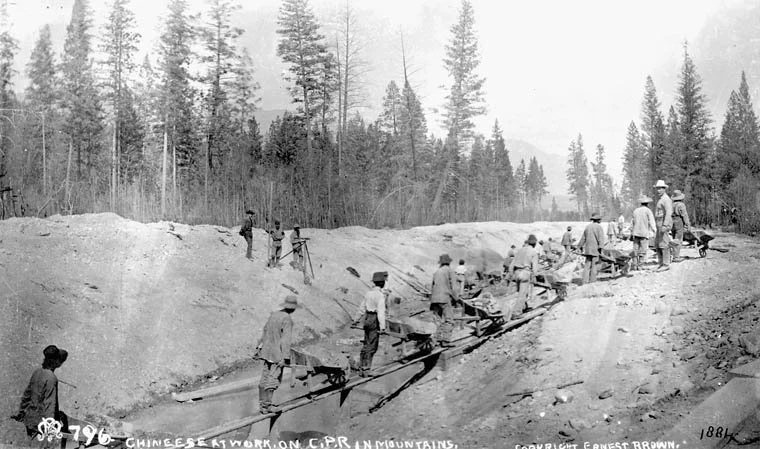
Mikan 3194432, courtesy of Library and Archives Canada
Station Agent
In a small station like this one, the station agent was also the telegraph operator and was responsible for the many day-to-day operations of the station. These responsibilities included communicating train orders, selling tickets, loading/unloading baggage and freight, operating the telegram machine (including transcribing the telegrams), organizing and directing passengers, and keeping the kerosene lamps burning – they were literally responsible for keeping the lights on. As a railway employee, the station agent also had to handle the paperwork and equipment in the office.
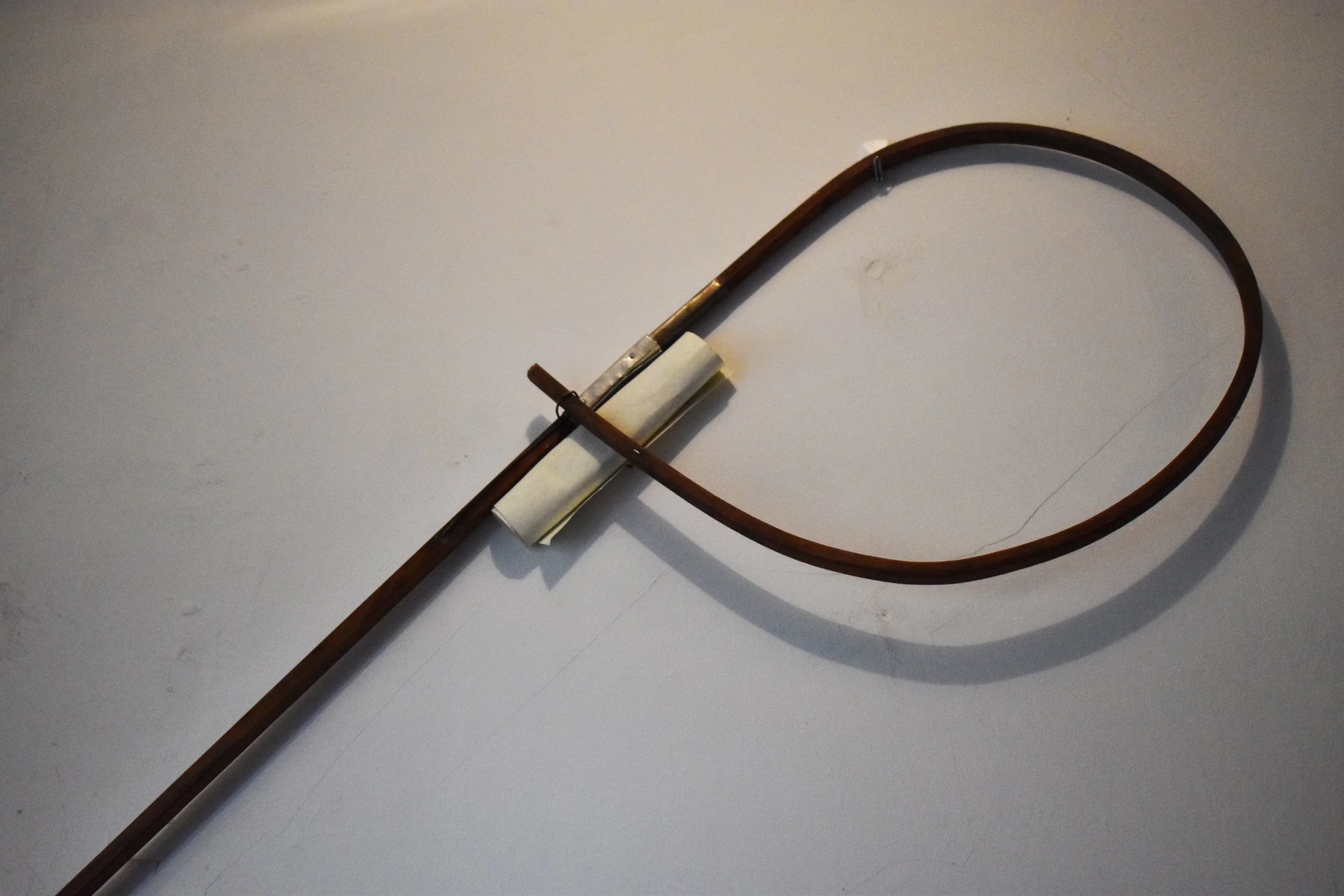
The Message Hoop
Passing messages and notes along to trains in motion was nearly impossible during the 20th century. As there was no internet, telephone, or other form of instant communication available, you would have to wait for the train to make a scheduled stop before passing a message along – and hope that the message wasn’t too late. To solve this problem, a simple solution was invented: a hoop. The hoop was used with the telegram to pass messages to trains at any point in their journey, without making them stop; it was as close to instant communication as could be achieved back then.
-
1. First, the station agent would receive a telegram. The telegram would tell the station master the message in addition to the train it had to be sent to. The telegram would come in through the receiver in Morse code, meaning that the station master would have to write it down as he was hearing it. If necessary, the station manager would tap a reply back to the sender.
2. The second step was transcribing the message. To do this, the station manager would take what he wrote down from the telegram and type it up on the typewriter.
3. Next, the station manager retrieves the hoop and ties the note to the inside of the hoop. He would check the schedule to see when the train he needed to pass the message on to was coming.
4. To pass the message off, the station master would go to the side of the tracks and hold the hoop up. As the train goes by, the conductor would lean out the window and grab the note from the hoop – all without stopping!